

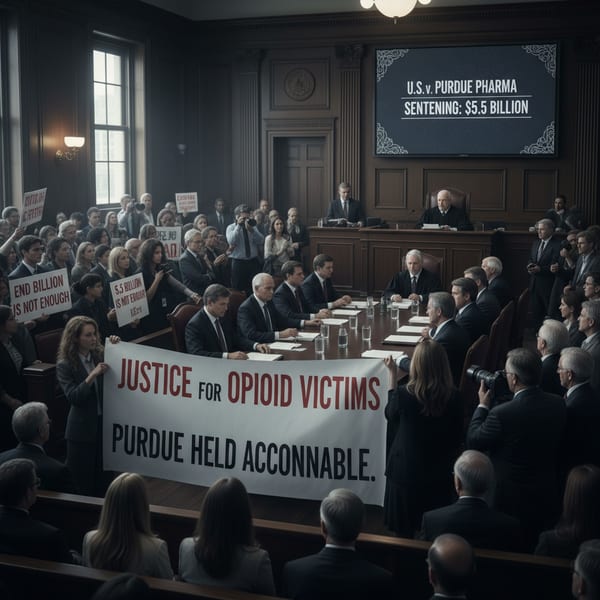
Pharmaceutical giant Purdue Pharma received a $5.5 billion sentence from federal authorities on April 29, 2026, for its role in fueling America’s devastating opioid epidemic through fraud and kickback schemes that ravaged communities nationwide.
Criminal Conspiracies Confirmed
The U.S. Department of Justice announced the sentencing via social media, confirming Purdue Pharma’s conviction on multiple counts of fraud and kickback conspiracies. The manufacturer of OxyContin systematically misled doctors and patients about addiction risks while incentivizing medical professionals to prescribe their highly addictive painkillers. Federal prosecutors documented years of deliberate deception that prioritized profits over public health, contributing directly to hundreds of thousands of overdose deaths across American communities.
Accountability After Devastation
The $5.5 billion penalty represents one of the largest corporate settlements in pharmaceutical history. Purdue’s aggressive marketing tactics convinced physicians that OxyContin posed minimal addiction risk, spawning a prescription drug crisis that evolved into widespread heroin and fentanyl abuse. The company’s Sackler family owners previously faced intense scrutiny for extracting billions in profits while communities struggled with addiction, crime, and death. This sentence closes a dark chapter of corporate malfeasance that destroyed families and strained healthcare systems nationwide.
Crisis Continues Despite Justice
While the conviction delivers accountability, America’s opioid epidemic continues claiming lives daily. Over 100,000 Americans died from drug overdoses in recent years, with synthetic opioids like fentanyl now dominating the crisis Purdue helped create. The financial penalty will fund treatment programs and community recovery efforts, though no amount can restore the lives lost or families shattered by addiction. This case underscores how corporate greed and regulatory failure combined to create a public health catastrophe that fundamentally changed American communities, particularly in rural and working-class regions where prescription painkiller abuse first took hold.