
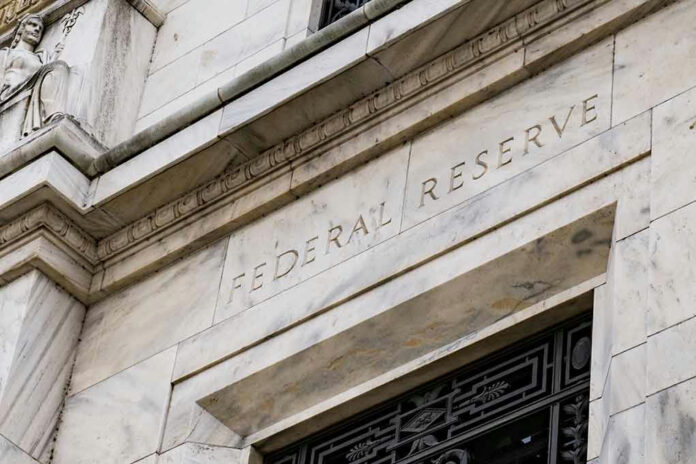
Federal Reserve Chair Kevin Warsh told Congress that “inflation is a choice” and vowed to make high prices a thing of the past, putting Washington on notice that the era of easy money and reckless spending is over.
Story Snapshot
- Warsh said inflation is “a choice” and promised to hit the Fed’s 2% target using all tools.
- He called the 2020 average-inflation strategy a “mistake” that helped fuel the price surge.
- He launched five task forces to overhaul inflation measures, Fed communications, and balance sheet policy.
- He insisted President Trump never asked him to cut rates, stressing Fed independence despite media attacks.
Warsh Puts Inflation Hawks Back in Charge
Federal Reserve Chair Kevin Warsh used his first full testimony on Capitol Hill to deliver a blunt message that will resonate with families crushed by years of rising prices: inflation is not fate, it is a policy choice, and the central bank must choose lower inflation. He reaffirmed the Federal Reserve’s commitment to a clear 2% inflation goal and stressed that the Fed has “no tolerance” for persistent high inflation, even with conflicts abroad and other shocks pushing up energy and food costs. For conservatives who watched the cost of groceries, gas, and housing soar under prior “woke” spending sprees, this was a rare moment of accountability from the nation’s top central banker.
Warsh told lawmakers that the tools needed to bring prices under control already exist and that it is the Federal Reserve’s job to use them without excuses. He highlighted interest rates and the Fed’s multi-trillion-dollar balance sheet as real policy levers, not mere “plumbing,” promising to use both to restore price stability and rebuild public trust. He described inflation as a “choice” that policymakers must make correctly, signaling a sharp break from years when officials blamed outside events for inflation and tried to talk away the problem as “transitory.” For Americans watching their savings erode, Warsh’s words marked a tougher stance than many heard from the Fed during the pandemic and its aftermath.
Admitting Past Mistakes and Scrapping a Flawed Framework
In a striking move, Warsh openly criticized the Federal Reserve’s own 2020 decision to adopt “flexible average inflation targeting,” saying that approach was a mistake that helped set the stage for the post-pandemic price surge. That framework allowed inflation to run above 2% for a time to make up for past shortfalls, a design that sounded technical but translated into higher prices at the store for everyday Americans. Warsh acknowledged that the Fed’s policy errors in 2021 and 2022 let inflation “take hold,” making it harder and more costly to bring down. This admission is rare from a central banker and matches long-standing conservative warnings that easy money and endless stimulus drive the price spiral hurting working families and retirees on fixed incomes.
Warsh said those mistakes justify what he called a “regime change” at the Fed, starting with how inflation is measured and targeted. He criticized the Fed’s preferred Personal Consumption Expenditures index, especially versions that strip out food and energy, as “quite imperfect” because they ignore the very costs that hit household budgets the hardest. Instead, he argued for more use of trimmed mean and median inflation measures, which drop extreme price moves and focus on the center of the distribution. Warsh also wants a massive expansion of price data, including a broad survey of prices drawn from government and private sources, to give a clearer view of what families are facing in the real economy. For readers angry that official statistics often feel disconnected from daily life, this push to rebuild the inflation yardstick could be a welcome shift.
Five Task Forces to Rein in the Fed and Refocus on Its Core Job
To turn words into action, Warsh announced five specific task forces inside the Federal Reserve that will review inflation frameworks, how the Fed uses its huge balance sheet, how it communicates policy, its use of data, and productivity trends tied to new technologies such as artificial intelligence. He said these groups will go back to “first principles” to stop another inflation blowout and keep the Fed inside its proper lane of monetary policy instead of drifting into climate, social, or political agendas. Warsh called long-range “forward guidance” and the famous Fed “dot plots” unhelpful, arguing they create false certainty and invite markets and politicians to game the central bank. He wants more candid, “messier” policy meetings with real debate, a smaller balance sheet over time, and less reliance on academic models that missed the inflation spike.
Warsh also pointed to a boom in business investment, especially in artificial intelligence and technology equipment, with growth near 25% in the first quarter, as a key transformation shaping the economy. He believes this investment wave can raise productivity and the economy’s potential growth, which might allow lower interest rates in the future without sparking new inflation. That view puts him somewhat at odds with many central bank officials who see new technology as a source of stronger demand and possible inflation pressure. Warsh did not yet lay out detailed numbers to prove his optimism, and some analysts say this leaves a gap that will need to be filled with hard data and clear models before the Fed can rely on it to set policy.
Holding the Line on Fed Independence Amid Media Attacks
One of the most tense moments in Warsh’s confirmation and later hearings came when senators and media outlets pushed him to address President Trump’s business interests, including reported gains from crypto ventures, and past public calls for rate cuts. Warsh said plainly that the president never asked him to lower interest rates or pre-commit to any policy decision, and he vowed not to take directives from the White House. He stressed that the Federal Reserve must “stay in its lane,” make decisions based on data, and remain independent even when facing pressure from both parties. This stance fits with the legal design of the Fed, which grants central bankers long terms and protection from removal to shield them from day-to-day politics.
Bryan Steil Questions Kevin Warsh on GENIUS Act Deadlines During House Financial Services Hearing
WASHINGTON, D.C. — During a House Financial Services Committee hearing, Representative Bryan Steil (R-WI) questioned Federal Reserve Chair Kevin Warsh about the approaching deadline pic.twitter.com/KXPsAepeT8
— Unitedstate (@cb24news1) July 15, 2026
Critics on the left quickly claimed Warsh did not go far enough in addressing Trump’s finances, trying to cast doubt on the Fed’s independence. Some Republicans, meanwhile, pressed him hard on the Fed’s earlier quantitative easing programs, echoing long-held conservative concerns that those bond-buying campaigns subsidized bloated government spending and widened inequality. Warsh’s refusal to wade into partisan fights and his focus on reforming the Fed’s tools rather than attacking the president lines up with a view of independence rooted in actions, not sound bites. Still, the combination of a vague “new inflation framework,” unresolved questions about how artificial intelligence will shape prices, and the ongoing Iran-related energy shocks gives critics material to question whether the Fed can fully deliver on Warsh’s promise that inflation is a choice that will be corrected.
Sources:
youtube.com, rev.com, federalreserve.gov, wsj.com, archive.org, ft.com, news.futunn.com, finance.yahoo.com, cnbc.com, cfr.org, invesco.com, wifpr.wharton.upenn.edu, hoover.org, stlouisfed.org, econofact.org