
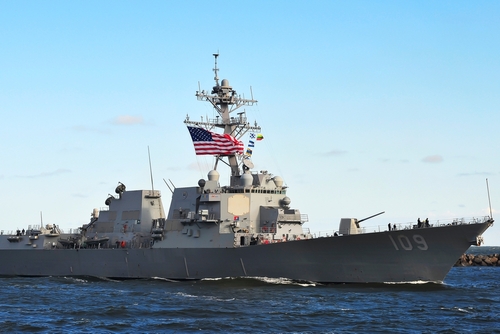
As U.S. Marines fast‑rope onto an Iranian‑flagged tanker in the Gulf, Americans at home are left asking whether this high‑stakes blockade is protecting our security or risking a wider war that could hit our wallets and test our Constitution.
Marines Storm Iranian Tanker As Blockade Enters New Phase
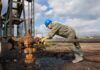
U.S. Marines from the 31st Marine Expeditionary Unit boarded the Iranian‑flagged oil tanker M/T Celestial Sea in the Gulf of Oman after commanders suspected it was attempting to reach an Iranian port in violation of the American blockade on Tehran’s shipping.[1][4] United States Central Command reported that the ship was intercepted, searched, and redirected as part of efforts to force Iran to reopen the Strait of Hormuz, a critical chokepoint for global oil shipments.[1][4] This marks at least the fifth commercial vessel intercepted since mid‑April.[1]
The Celestial Sea operation follows earlier actions in the Indian Ocean and Bay of Bengal, where U.S. forces boarded tankers described as sanctioned and stateless while transporting oil from Iran.[1][3] Pentagon statements framed these missions as “maritime interdiction and right of visit” boardings aimed at disrupting illicit networks that funnel oil money into Iran’s regime and its proxy militias.[1][3] Officials stressed that international waters “cannot be used as a shield by sanctioned actors,” signaling Washington’s intention to pursue Iranian oil anywhere outside friendly ports.[1]
Trump’s Blockade Policy Aims To Check Iran And Protect Global Shipping
The 2026 United States naval blockade of Iran, announced after a fragile ceasefire, seeks to pressure Tehran to stop attacks on commercial ships and return to negotiations while reopening the Strait of Hormuz to normal traffic.[2] United States Central Command has said the blockade applies to vessels entering or departing Iranian ports and coastal areas but would not impede ships trading with non‑Iranian ports.[2] That distinction is meant to reassure allies that lawful commerce can continue while Iran’s oil lifeline faces tighter scrutiny at sea.
U.S. officials point to a pattern of Iranian Revolutionary Guard attacks and seizures of foreign‑flagged ships in and near the Strait as justification for a tougher posture.[1][3] Reports in this period describe Iran seizing container ships and harassing tankers, raising fears of another energy shock and shipping crisis.[1][3] For many conservatives, a firm blockade that stops Iranian provocations before they spiral into a larger conflict aligns with the priority of peace through strength, especially after years of weak responses and appeasement under prior administrations that emboldened Tehran’s theocrats.
Unclear Legal Ground Leaves Room For Concern And Demands For Transparency
While the administration has stressed enforcement against illicit networks, the publicly available material does not yet show the specific legal authority cited for the Celestial Sea boarding or similar operations.[1][2][3] No operation order, blockade proclamation, or detailed legal memorandum has been released that explains whether commanders relied on blockade law, sanctions enforcement, or the traditional right of visit on the high seas.[1][2][3] Legal analysts note that international law treats boarding and seizing foreign merchant ships without flag‑state consent as highly restricted, especially outside declared war.
US MILITARY ANNOUNCES THEY BOARDING IRANIAN-FLAGGED OIL TANKER.
— First Squawk (@FirstSquawk) May 20, 2026
Commentary on prior tanker seizures suggests that international rules may support boarding and inspecting a suspect vessel but are more skeptical of outright seizure of ship and cargo when based solely on unilateral sanctions.[4] The Pentagon and State Department have emphasized terms like “stateless” and “sanctioned” to frame these tankers as outside normal flag protections, yet the public record here does not include registry documents, cargo manifests, or independent maritime data proving those claims for Celestial Sea.[1][3] That evidentiary gap does not mean the claims are false, but it does justify conservative calls for clearer documentation and congressional oversight.
Balancing Toughness On Iran With Energy Security And Limited Government
Every move in the Strait of Hormuz carries consequences for American families already squeezed by years of inflation and energy price shocks. Iran has a long record of weaponizing oil routes, and any miscalculation around a blockade could send crude prices higher, hitting gas pumps and home‑heating bills. Analysts warn that competing narratives from Washington and Tehran, and the lack of neutral documentation on specific boardings, can fuel confusion and volatility in global markets.[1][2][3] That is why clear, consistent messaging matters.
US MILITARY ANNOUNCES THEY BOARDING IRANIAN-FLAGGED OIL TANKER.
— First Squawk (@FirstSquawk) May 20, 2026
Conservatives generally support getting tough on a hostile regime that funds terrorism, threatens Israel, and seeks nuclear weapons capability, but they also expect the United States government to act within constitutional bounds, avoid endless wars, and be honest with the public about risks and legal foundations. As more tankers are stopped and searched, Congress should demand the underlying legal directives, insist on limits that protect neutral shipping, and ensure the blockade remains a focused tool—not an open‑ended mandate for unchecked executive power at sea.
Sources:
[1] YouTube – US Military BOARDS & CAPTURES Second Iran-Linked Oil Tanker …
[2] Web – 2026 United States naval blockade of Iran – Wikipedia
[3] YouTube – US Military boards Iranian-flagged oil TANKER suspected of trying …
[4] Web – US boards oil tanker previously sanctioned for smuggling Iranian …