
Two CIA operatives died on a remote Mexican mountain road after helping shut down cartel drug labs, igniting a diplomatic firestorm that exposes the shadowy extent of American intelligence operations south of the border.
When Training Missions Turn Deadly
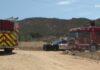
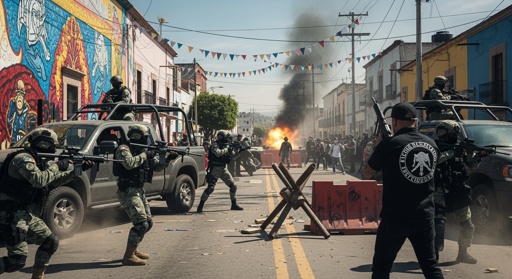
The Sunday afternoon crash killed four men traveling together from an operation site in the rugged Sierra Tarahumara mountains. Two Americans, officially listed as U.S. Embassy personnel, rode alongside Pedro Ceguera, chief of Chihuahua’s Agency of State Investigation, and his subordinate Genaro Méndez Montes. Hours earlier, their joint effort had dismantled six clandestine laboratories producing synthetic drugs for the notorious Sinaloa Cartel. The road between Morelos and Guachochi offers no margin for error, winding through cartel-controlled territory where every vehicle draws scrutiny and suspicious accidents raise immediate questions about foul play.
The Cover Story Unravels
Governor Maru Campos initially characterized the incident as a training accident, a narrative echoed by Chihuahua prosecutor César Jáuregui Moreno who described routine exchanges between American instructors and local law enforcement. That version crumbled within 48 hours when U.S. officials anonymously confirmed to the Associated Press and The Intercept that both deceased Americans worked for the Central Intelligence Agency. The CIA itself maintained its standard policy of declining comment, leaving the confirmation to leak through unofficial channels while Mexico’s federal government discovered it had covert American intelligence operatives conducting drug interdiction operations without proper notification or authorization from Mexico City.
Sovereignty Versus Security Cooperation
President Sheinbaum’s response reflected barely contained fury over what her administration views as unauthorized foreign intelligence operations on Mexican soil. She ordered a comprehensive federal investigation to determine whether the CIA presence violated Mexico’s constitution or national security laws, demanding answers about what these operatives were actually doing in Chihuahua. The disconnect between federal and state governments reveals deeper fractures in Mexican politics, with opposition PAN party officials in Chihuahua eager to maintain security assistance relationships with Washington while Sheinbaum’s Morena party prioritizes sovereignty and resisting American overreach. This clash mirrors historical tensions dating back to the 2008 Mérida Initiative, which began as transparent training cooperation but evolved into murky covert operations as the fentanyl crisis intensified.
The Expanding Shadow War
The Chihuahua deaths represent just one visible data point in an accelerating pattern of American interventionism across Latin America under current administration policies. Since September 2025, U.S. forces have killed nearly 200 people in boat interdiction strikes across the Caribbean and eastern Pacific, operations conducted with minimal transparency or accountability. These aggressive tactics echo the disastrous Fast and Furious gun-tracking operation of 2011, another example of American law enforcement overstepping boundaries with catastrophic consequences. The Trump administration’s hardline approach to cartel networks prioritizes results over diplomatic niceties, but this incident demonstrates the risks inherent in conducting intelligence operations without proper coordination with host governments, especially when those governments face their own internal political pressures regarding national sovereignty.
Unanswered Questions in Cartel Country
The circumstances surrounding the crash itself remain maddeningly vague despite the attention focused on the CIA revelation. No evidence of foul play has emerged publicly, yet the location, timing, and participants naturally invite suspicion in a region where the Sinaloa Cartel maintains iron control and has demonstrated repeated willingness to eliminate threats. The fact that the crash occurred after the operation rather than during it raises questions about whether the Americans participated directly in the raid or provided support from a distance before meeting the Mexican officials for the return journey. Ambassador Ronald Johnson now faces pointed questions from Mexican federal investigators seeking to reconstruct exactly what coordination existed between the embassy, CIA personnel, state officials, and the operation that targeted those six laboratories producing the synthetic drugs flooding American communities.
The investigation’s outcome will likely determine whether similar cooperation continues or whether Mexico imposes new restrictions on American law enforcement and intelligence presence. For families of the deceased on both sides of the border, bureaucratic sovereignty disputes offer cold comfort. The operational partnership between U.S. intelligence agencies and willing Mexican state governments clearly exists regardless of what federal authorities in Mexico City knew or approved. That reality persists whether conducted openly through diplomatic channels or concealed behind cover identities and plausible deniability, leaving future operatives to navigate the same dangerous terrain where training missions and covert operations blur into fatal ambiguity.
Sources:
Initial Report: U.S. Officials Killed in Mexico Crash During Drug Enforcement – Democracy Now!