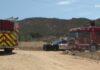

Sirens over Kuwait City and a deadly strike on its main airport show how far Iran is willing to go to hit U.S. interests and allies — and how quickly this war can threaten Americans abroad.
Story Snapshot
- Iranian drones slammed into Kuwait International Airport’s main passenger terminal, killing one and injuring dozens.
- Kuwait’s government publicly branded the strike “criminal” and “heinous Iranian aggression” against a civilian target.
- Iran’s Revolutionary Guard denied responsibility and tried to blame a U.S. interceptor, but U.S. Central Command flatly rejected that claim.
- The attack is part of a wider Iranian drone and missile campaign across the Gulf that targets U.S. partners and infrastructure.
Deadly Drone Strike Shuts Kuwait’s Main Airport
Early Wednesday, multiple drones hit Kuwait International Airport’s Terminal 1, tearing into the passenger building and throwing travelers and workers into chaos. Kuwait’s civil aviation authority reported severe damage to the terminal structure and halted normal air traffic as fires and debris made the area unsafe. Surveillance cameras captured a delta-wing drone slamming directly into the roof and exploding, leaving shattered glass, twisted metal, and terrified families scrambling for cover. The airport had only recently reopened after earlier war disruptions, underscoring how fragile normal life is near this growing conflict zone.
Kuwaiti officials said the strike killed one person, an Indian national working in the airport area, and wounded about sixty more, including passengers and staff. Medical teams rushed the injured to local hospitals, with some reported in serious condition due to burns and blast injuries. The Defense Ministry spokesman described the impact as causing “significant material damage” to the building, and flights were diverted to other facilities while emergency crews secured the scene. For ordinary travelers, a routine flight day turned into a nightmare as alarms blared and sirens echoed across Kuwait City.
Kuwait Blames Iran; Iran Blames America
After the attack, Kuwait’s Ministry of Defense and Foreign Ministry left no doubt about whom they blame, calling it “criminal Iranian aggression” and holding Iran fully responsible for assaults on civilian and diplomatic sites. Their statements said “hostile drones” targeted the passenger terminal and vital facilities, breaching Kuwait’s sovereignty and forcing the country to activate nationwide air defense alerts. Kuwait’s leaders stressed they reserve the right to take “all necessary measures” to defend their territory, a serious message from a usually quiet Gulf partner that hosts American forces and depends on regional stability for its economy and security.
Iran’s Islamic Revolutionary Guard Corps quickly denied attacking the airport, claiming without evidence that a U.S.-made interceptor missile malfunctioned and caused the destruction. An outlet linked to the Revolutionary Guard even suggested the CCTV footage was fabricated by Iran’s enemies to smear Tehran. U.S. Central Command responded in plain language on social media, calling Iran’s story “totally false” and stating that Iranian drones conducted a “deliberate, calculated, and unjustified attack” on the civilian airport. This claim-and-denial pattern has repeated across the region, as Iran strikes targets but then tries to muddy the waters to avoid direct blame while still spreading fear.
Sirens Across Kuwait as Iran Targets U.S. Interests
The airport hit was not a one-off event; Kuwait reported waves of missiles and drones launched from Iran against its territory over several days, forcing air defenses to fire and sirens to sound in several areas. Kuwaiti forces said they intercepted many incoming threats, including missiles aimed at civilian facilities and what appear to be U.S.-linked sites in the country. American military statements confirm that U.S. forces have downed multiple Iranian drones targeting their bases in Kuwait, even as Iran claims to have hit U.S. systems directly. Each exchange raises the chance that a single failure or miscalculation could cost American lives or cripple critical infrastructure.
Human rights and defense analysts note that since late February, Iran has launched thousands of drones and missiles across the Gulf states in response to U.S.-Israeli strikes on Iranian leadership. Iran’s campaign has repeatedly hit civilian infrastructure — airports, oil ports, refineries, and even water and power plants — in countries like Kuwait, Saudi Arabia, Bahrain, and the United Arab Emirates. These are U.S.-aligned partners, many hosting American troops or relying on U.S. security guarantees. When Iran hits their airports and energy hubs, it is not only testing local governments; it is also probing American resolve and trying to raise pressure on Washington.
What This Means for American Patriots at Home
For conservatives watching from the United States, this Kuwait strike is a clear warning about Iran’s reach and its willingness to hit soft civilian targets to gain leverage. A drone packed with explosives did not aim at a tank or warship; it slammed into a passenger terminal where everyday workers and travelers gathered, turning a hub of commerce into a battlefield. That choice fits a broader pattern where Iran uses drones to threaten global oil flows, airports, and desalination plants, knowing that chaos in these places drives up energy prices and shakes economies far beyond the Middle East.
⚡️🚨 Digest — 09:34–10:37 UTC
Kuwait reports one of its worst nights yet: a major oil facility hit with "extensive damage," a second power plant struck in two days, flights suspended, per Kuwait Petroleum/Oil Corporation and Reuters.
🔴 Jordan: multiple explosions at Al-Azraq…
— Middle East Observer (@ME_Observer_) July 18, 2026
The Trump administration is now responsible for protecting U.S. troops, diplomats, and citizens in this region, even as Iran tries to exploit every opening. Washington has already struck Iranian radar and drone command sites and is working with Gulf air defenses to knock down incoming threats before they hit crowded cities. But this war also reminds us that American strength abroad depends on strong borders, reliable energy at home, and a clear stand against regimes that use terror and lies as tools of statecraft. Iran’s drones over Kuwait City show what happens when bad actors believe the West is too divided or distracted to push back.
Sources:
youtube.com, aljazeera.com, thenationalnews.com, reuters.com, theguardian.com, bbc.com, houseofsaud.com, english.aawsat.com, amnesty.org, solaceglobal.com