

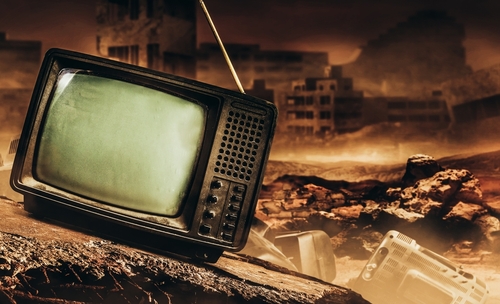
The media mogul who launched CNN prepared a hymn-filled farewell broadcast for humanity’s final moments, and it’s now haunting the internet after his death.
The Apocalypse Tape That Waited Decades
Ted Turner recorded more than just a network launch when CNN debuted on June 1, 1980. After capturing “The Star-Spangled Banner” as the official sign-on, Turner made an impromptu request that would become broadcasting legend. He ordered a recording of “Nearer, My God, To Thee” performed by U.S. Army, Navy, Air Force, and Marine bands at Turner Broadcasting’s Techwood Campus in Atlanta. The file sat in CNN’s archives labeled “TURNER DOOMSDAY VIDEO” with the notation “HFR till end of the world confirmed,” waiting for an apocalypse that Turner half-jokingly, half-seriously believed his network would cover live.
A Broadcaster’s Audacious Promise
Turner’s vision for CNN defied the media norms of the late 1970s, when networks signed off each night and 24-hour news seemed financially impossible. He declared his network would broadcast perpetually, stating: “Barring satellite problems, we won’t be signing off until the world ends… We’ll play ‘Nearer My God To Thee’ before we sign off.” This wasn’t mere marketing bravado. The Cold War context made nuclear annihilation feel plausible, with Three Mile Island fresh in public memory and tensions escalating toward events like Able Archer 83. Turner’s doomsday contingency reflected both dark humor and genuine preparedness for existential catastrophe, embodying the defiant optimism that defined his entrepreneurial approach.
From Secret Archive to Internet Sensation
The video remained buried until former CNN intern Michael Ballaban discovered it in the network’s Mira archive system during the 2010s. Ballaban leaked the footage to YouTube, where it gained cult status among media historians and curious internet users. The somber hymn, performed with military precision against a static backdrop, struck viewers as simultaneously eerie and oddly touching. The video’s existence confirmed what had been broadcasting folklore, validating Turner’s reputation for theatrical gestures that somehow worked. When Turner died at 87 in early May 2026, social media algorithms and human nostalgia combined to push the forgotten clip back into viral prominence across platforms like X and YouTube.
The Legacy of a Media Maverick
Turner’s doomsday video captures something essential about his approach to business and culture. He built CNN when competitors dismissed round-the-clock news as economically absurd, later adding TBS and TNT to create a media empire that reshaped American television. Selling to Time Warner in 1996 didn’t diminish his cultural footprint; it amplified it through corporate reach. The resurfaced video serves as an unintentional epitaph, reminding viewers that Turner operated with conviction bordering on recklessness. His willingness to prepare for apocalypse while simultaneously betting everything on perpetual broadcasting reveals the paradoxical mindset that drives true innovators, comfortable holding contradictory certainties simultaneously.
Why This Footage Still Resonates
No other major network has confirmed creating equivalent doomsday content, though emergency broadcast protocols exist across the industry. Turner’s video stands apart because it wasn’t bureaucratic procedure but personal vision made tangible. The military bands add gravitas that validates the seriousness beneath Turner’s showmanship. In an era of deepfakes and AI-generated content, this analog artifact from 1980 carries authenticity that newer media struggles to replicate. The hymn choice itself, famously associated with the Titanic’s sinking, adds layers of meaning about facing inevitable endings with dignity. Turner understood symbolism’s power, selecting a melody that communicated solemnity without despair, patriotism without jingoism.
A Curious Cultural Footnote
The video’s viral resurgence highlights how legacy content gains new life in the streaming age. Platforms like Netflix and Disney increasingly mine archives for material that carries nostalgic weight, and Turner’s footage exemplifies the goldmine waiting in broadcast vaults. Director Joe Dante joked after the initial leak that his fictional version was superior, but the real video’s understated power needs no embellishment. NPR created a satirical 2015 parody about end-of-world programming, mocking public radio’s self-seriousness, yet Turner’s earnest preparation carries more cultural resonance. The footage represents a moment when American entrepreneurship, Cold War anxiety, and broadcasting ambition intersected, preserved accidentally for a generation that faces different apocalyptic fears but recognizes the same human impulse to document until the final moment.
Sources:
Ted Turner’s chilling ‘end of world’ CNN video resurfaces after his death – Hindustan Times
Turner Doomsday Video – Wikipedia