

A massive new missile deal is testing whether Trump’s “Arsenal of Freedom” rebuild is smart defense or a blank check for the war machine.
Story Snapshot
- Lockheed Martin landed a seven-year deal worth up to $35.35 billion to boost missile-interceptor output for the Trump administration’s war strategy.
- The contract would quadruple yearly Terminal High Altitude Area Defense (THAAD) interceptor production from 96 to as many as 400 missiles.[4]
- The deal is an “undefinitized” contract, meaning Congress still has to approve the full funding before it becomes fully locked in.[2]
- Supporters call this a critical step to rebuild U.S. missile strength, while critics paint it as proof of a “war economy” and runaway spending.[2]
Trump’s War Buildup Meets a Missile-Short World
President Donald Trump came back into office facing a world on edge, with Iran firing missiles at ships and U.S. forces and allies under real threat.[6] Years of drawdowns, globalist focus, and more money on social experiments than ammunition left America short on key weapons. Reports say the United States used a large share of its high-end interceptors during the recent clash with Iran, forcing planners to admit our missile magazines were far too thin for a major war.[6]
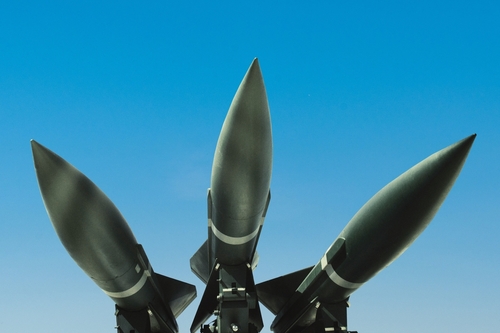
The new deal with Lockheed Martin is meant to fix that gap fast. The Department of War awarded the company a contract action worth up to $35.35 billion over seven years to build far more Terminal High Altitude Area Defense, or THAAD, interceptors.[4] These are the missiles that knock down incoming enemy rockets in the final phase of flight, protecting U.S. bases, allies, and critical infrastructure. Under the plan, yearly production would climb from 96 interceptors to as many as 400, more than quadrupling output.[4]
How the $35 Billion THAAD Deal Actually Works
The contract is not a typical slow, one-year-at-a-time weapons buy. The Trump administration shifted to a multiyear approach to give factories a long, steady demand signal and push costs down with bulk orders.[4] Lockheed Martin says this seven-year plan will let them hire more workers, lock in suppliers, and speed up deliveries to the troops at what they call “unprecedented speed and scale.”[1] The work will be spread across sites in Texas, California, Alabama, and Arkansas, tying heartland jobs to national defense.[7]
But there is a catch that critics highlight. Washington reporters point out this deal is an “undefinitized contract action.”[2] That means the Pentagon can tell Lockheed to ramp up, but some terms and full pricing are not final until Congress signs off. The Hill notes that this kind of contract still depends on lawmakers approving the full amount in regular defense spending bills before the company gets a fully definitive deal.[2] In plain English, the plan is big, but Capitol Hill holds the purse.
Rebuilding the Arsenal or Feeding a ‘War Economy’?
Trump’s team calls this part of a larger “Acquisition Transformation Strategy” to fix a broken defense industrial base after years of neglect.[4] Multiyear missile deals, new plants, and tough rules tying executive pay to on-time delivery are meant to end the old game where defense chiefs talked tough but let factories run lean while money chased stock buybacks instead of production.[7] Lockheed’s chief executive officer has already said the company is pouring billions of its own money into new missile lines after the Trump defense push.[3]
Lockheed Martin plans to invest more than $9 billion through 2030 to build or upgrade weapons plants, including a new munitions production center in Alabama tied to the THAAD ramp.[5] For many conservatives, that looks like the kind of “America First” reindustrialization they wanted: real factories, skilled jobs, and hard power instead of lectures on climate rules and diversity quotas. The Trump White House also signed an executive order forcing defense contractors to link executive bonuses to weapons deliveries, not short-term stock gains, to keep Wall Street games from gutting readiness again.[7]
The Undefinitized Contract Question and Conservative Concerns
Still, fiscal conservatives have reasons to keep their eyes open. Because this is an undefinitized contract, final terms, specifications, and full pricing are not completely locked before work ramps up.[17] The government uses this tool when it says it cannot wait for a full, slow negotiation, but past audits show these deals can run late and over cost if not watched closely.[23] In other words, urgency is real, but haste can invite waste if lawmakers and inspectors drop their guard.
The Pentagon has awarded Lockheed Martin a seven-year contract worth up to $35 billion to churn out hundreds of Terminal High Altitude Area Defense (THAAD) interceptors a year, in an effort to replenish dwindling U.S. munitions stockpiles.https://t.co/KoeRDyP5lO
— Adrian Ang (@AUJ_Ang) June 26, 2026
Critics on the left and some libertarians brand this push as “Trump’s war economy,” arguing that big missile orders prove Washington is addicted to conflict and spending.[2] They point to the size of the deal and the ongoing Iran crisis to claim this is reaction, not strategy. Yet these same voices were quiet when past administrations spent trillions on foreign adventures with no clear endgame and no serious rebuilding of the U.S. arsenal. The honest debate for conservatives is not whether to arm America, but how to do it without repeating old Pentagon boondoggles.
What Patriots Should Watch Next
For gun owners and defenders of the Constitution, the core issue is whether this new war economy strengthens deterrence without feeding an unaccountable military bureaucracy. The THAAD system is defensive by design, meant to stop incoming missiles, not start wars. But a bigger federal checkbook always brings risk of waste, mission creep, and pressure to keep conflicts simmering. Trump has tried to answer that with hard performance rules and a focus on production at home instead of forever wars abroad.[4]
Going forward, conservatives should push Congress to demand clear cost and performance data on this THAAD deal. Lawmakers need to verify that bulk buying really cuts the price per interceptor and that new plants deliver missiles that work as promised, on time. Strong missile defense, rebuilt industry, and real oversight can go together. If they do, America gets a tougher shield without handing the permanent war lobby a blank check.
Sources:
[1] Web – Trump’s War Economy Accelerates As Lockheed Wins $35 Billion Deal To …
[2] Web – Lockheed Martin wins over $35 billion contract to quadruple THAAD …
[3] Web – Lockheed Martin gets $35B Pentagon contract for restocking THAAD …
[4] Web – Lockheed Martin (LMT) Lands $35 Billion THAAD Deal And …
[5] Web – $35 Billion THAAD Seven-Year Procurement Award Propels …
[6] Web – Lockheed Martin Gets More Than $35 Billion U.S. Contract for …
[7] Web – Lockheed Martin Inks $35 Billion Deal To Replenish Missile Stockpiles
[17] Web – Lockheed Martin Awarded Contract To Accelerate THAAD Production
[23] Web – The Basics of Undefinitized Contractual Actions (UCAs)