
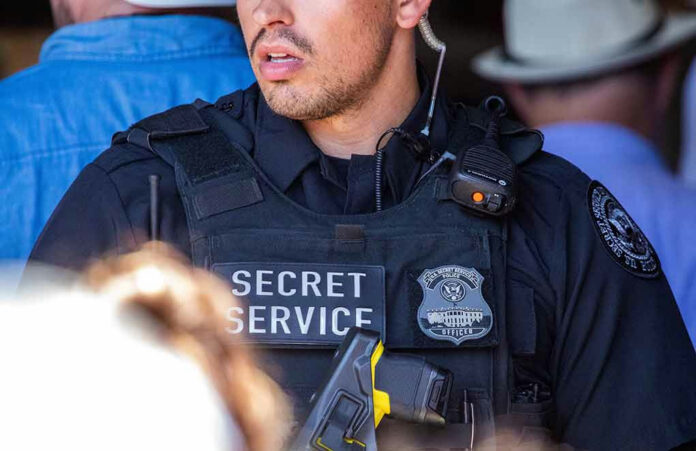
The watchdog now says the Secret Service missed 102 warning calls about Trump’s would‑be assassin before the shots were fired.
Story Snapshot
- A Department of Homeland Security watchdog found the Secret Service never received 102 local radio transmissions warning about a suspicious man later identified as the Trump shooter.
- Agents got only a handful of calls and texts, never warned Trump’s protective detail, and failed to set up a joint communications room with local police.
- The report says a counter‑drone system was down and run by one under‑trained operator, while other investigations show deeper leadership and policy failures.
- Bipartisan Senate and internal Secret Service reviews now describe the Butler rally as a preventable security breakdown, yet almost no one was fired.
Watchdog Finds 102 Missed Warnings Before Butler Rally Shooting
The Department of Homeland Security inspector general found the United States Secret Service did not receive 102 local radio transmissions about the gunman who tried to assassinate President Donald Trump at his 2024 rally in Butler, Pennsylvania. Local officers were talking over their radios about a suspicious person later identified as Thomas Crooks, but that traffic never reached the agents charged with guarding Trump. The report says this breakdown happened at the worst possible time, with the threat growing and Trump already on stage.
According to the inspector general, the Secret Service failed to set up a joint communications room with local law enforcement, even though local police were the ones getting real‑time reports about the suspicious man near the rally site. Instead of having one shared hub to pass along urgent messages, information sat in separate systems and never flowed to Trump’s detail. The watchdog wrote that agents received only five phone calls and three text messages about Crooks, a tiny trickle compared with the 102 missed radio calls.
How Communication Failures Left Trump’s Detail in the Dark
Because those 102 transmissions never reached federal agents, Secret Service members did not alert President Trump’s protective detail about concerns over a suspicious person, the inspector general said. This matches other reporting that local officers saw or discussed a man on a nearby rooftop minutes before the shots, but that warning never reached Secret Service snipers in time. CNN found that local police had even set aside radios for Secret Service agents before the event, but agents never picked them up, leaving coordination to slow intermediaries instead of direct contact.
The Butler breakdown fits a larger pattern uncovered by Congress and the agency’s own internal review. A Mission Assurance Inquiry from the Secret Service’s Office of Professional Responsibility reported serious problems in communication, command and control, and coordination with outside entities during the rally. A bipartisan Senate report said agents chose not to retrieve radios from local and state law enforcement, which severely limited coordination during the critical period before the attack. That Senate document described “a severe lack of coordination and communication” from the advance process all the way through the event.
Counter‑Drone Failure and Deeper System Problems
The inspector general also highlighted a stunning failure in technology meant to spot threats from the air. The report says Crooks flew a drone over the area hours before the shooting, but the Secret Service’s counter‑drone system was inoperable, so the flight went undetected. A single under‑trained operator was assigned to run the system, and the watchdog found that this person did not test it before the rally. Another Secret Service report summarized by local media echoed that drone problems and other technical issues plagued the agency that day.
🚨Two years ago today, Thomas Matthew Crooks opened fire at Trump’s Butler rally. He was a registered Republican whose neighbor Kelly Little told WTAE there were “MAGA-supporting signs” in his family’s yard “for a while.” Classmate Max Smith told the Philadelphia Inquirer that in… pic.twitter.com/2kFOadnqdd
— Reich-Wing Watch (@ReichWingWatch) July 13, 2026
Even beyond Butler, outside experts have raised concerns about how the Secret Service handles communication technology. CNN reported that many current and former law enforcement officials say the agency has not used a national broadband network built after the September 11 attacks to link police and emergency responders. Instead, the Secret Service still relies on a fragmented communication system that pushes messages through intermediaries and command posts. That setup may work in calm times but can fail badly in fast‑moving crisis moments when every second counts.
Minimal Accountability Despite Bipartisan Condemnation
Congress and outside watchdogs have treated the Butler shooting as more than a one‑off mistake. A bipartisan Senate Homeland Security and Governmental Affairs Committee report chaired by Senator Rand Paul said Secret Service failures “directly contributed” to the assassination attempt, including denied resource requests and missed warnings. The same report noted the agency formally disciplined only six personnel and even reduced punishments for some of them, despite the range of documented failures. That finding feeds frustration among many conservatives who see Washington protecting its own instead of fixing broken systems.
Other oversight bodies reached similar conclusions. A Government Accountability Office review requested by Senator Chuck Grassley found the Secret Service had no process to share classified threat information with partners when a threat was not labeled “imminent,” leaving serious warnings stuck at headquarters. An independent panel report for the Department of Homeland Security listed specific failures and deeper concerns in how presidential protection is run. Together with the inspector general’s new finding about 102 missed radio transmissions, these reports paint a clear picture: the systems meant to protect the president were not ready, and the bureaucracy has been slow to truly change.
Sources:
townhall.com, ap.org, nytimes.com, hsgac.senate.gov, bbc.com, pbs.org, judiciary.senate.gov, secretservice.gov