
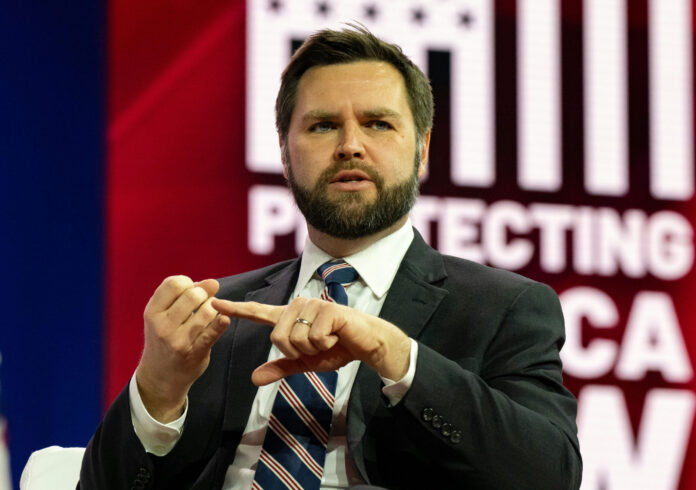
Vice President JD Vance just turned Medicaid’s biggest political vulnerability into a blunt ultimatum: prove your program isn’t being gamed, or Washington will freeze the money.
Minnesota Becomes the First High-Profile Test Case
Vice President JD Vance and CMS Administrator Dr. Mehmet Oz announced May 13 that the federal government is temporarily pausing $259 million in Medicaid funding to Minnesota after investigators identified large volumes of questionable spending. The administration said $244 million involved unsupported or potentially fraudulent claims, plus another $15 million tied to individuals who lacked satisfactory immigration status. Gov. Tim Walz was given 60 days to answer the audit and outline corrective actions.
How the Administration Is Using Federal Leverage
The Minnesota action is not being presented as an isolated dispute; it is being framed as the front edge of a nationwide compliance campaign. Oz has described a 50-state push focused on provider revalidation and tougher oversight, with states expected to submit plans on a compressed timeline. In practice, that means governors must show they can verify who is billing Medicaid, confirm services were actually delivered, and remove high-risk providers before improper payments pile up.
Why Medicaid Fraud Keeps Coming Back—And Why Audits Hit Hard
Medicaid’s structure makes it a permanent target for waste and abuse: states administer programs, but federal taxpayers shoulder a large share of the cost. That split can dilute accountability, especially when eligibility and provider screening rules are weak or inconsistently enforced. The administration’s case for aggressive action rests on the claim that improper payments are not marginal, and that expanding enrollment without tight verification can multiply billing schemes in sectors like personal care services.
Patients, Providers, and the Risk of Collateral Damage
The immediate policy problem is timing. A sudden pause of $259 million creates a real cash-flow shock for a state program that pays hospitals, clinics, and long-term care providers on predictable schedules. If Minnesota backfills the gap with state dollars, taxpayers inside the state absorb the hit; if it does not, providers may delay services, reduce capacity, or prioritize privately insured patients. Even a fraud-focused intervention can ripple into access issues for the disabled, children, and seniors.
The Political Fight: Oversight vs. Obstruction
Republicans argue that enforcing eligibility and payment integrity is the only way to protect a safety net that was never meant to function as a blank check. Democrats, including Minnesota officials cited in local reporting, have pushed back that audit methods can be flawed and that funding freezes punish patients more than perpetrators. The reality is that both sides will use the standoff as a national talking point—either as proof that Washington is finally policing waste, or as proof that federal power is being weaponized.
JD Vance issues ultimatum to 50 states: Crack down on fraud or Trump admin will cut Medicaid funding https://t.co/wuVVzE85aB pic.twitter.com/GJpskKIKWc
— New York Post (@nypost) May 13, 2026
For other states, the main takeaway is practical rather than partisan: federal Medicaid dollars are now being treated as conditional on fast, documented compliance. That may reward states that already run tight verification and aggressive provider screening, while exposing lax systems that assumed funding would keep flowing regardless of performance. What remains unclear, based on the public information so far, is how CMS will measure “satisfactory” fixes—and how much disruption Washington is willing to tolerate to prove it means it.
Sources:
Vance to pause Medicaid funding in Minnesota over fraud concerns, gives ultimatum to Walz
Dr. Oz announces a 50-state audit of Medicaid program oversight
Trump administration temporarily halting Medicaid funding to Minnesota