

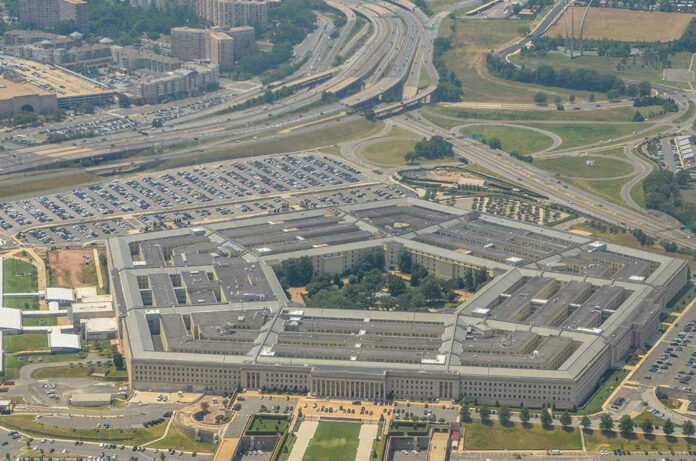
The Pentagon has quietly locked reporters out of its own press office by declaring it a classified zone, raising serious questions about transparency inside the world’s most powerful military headquarters.
Story Snapshot
- The Pentagon has redesignated its press office as a classified space and barred journalists from entering.
- Officials claim the move is needed to handle sensitive material, but critics say it further chills independent reporting on the military.[4]
- New Pentagon press rules already demanded reporters pledge not to gather information beyond what officials authorize, prompting outlets to turn in their badges in protest.[2][3]
- A federal court recently ruled earlier Pentagon press restrictions unconstitutional, forcing the department to walk back some policies even as it tightens physical access.[1]
Pentagon Turns Press Office Into Classified Zone
The Defense Department has formally barred journalists from entering the Pentagon press office by redesignating it as a classified area, effectively sealing off a long‑standing hub where reporters met with public affairs officers and staff. Pentagon officials say the office has been converted into a Sensitive Compartmented Information Facility, arguing that speechwriters and staff now need to handle classified material inside the space. This change means journalists are “no longer permitted” in the press office, even with valid building credentials.
Defense leaders frame the move as a security necessity, part of a broader set of “updated physical control measures” that strictly limit where press and media can move unescorted within the building. A 2025 Defense Department document already confined reporters mainly to certain corridors on the second floor, with other areas requiring escorts and additional screening. By making the press office itself classified, the Pentagon has taken an additional step that sharply reduces informal contact between journalists and officials inside the building.
New Rules Demand Loyalty Pledge On Information Gathering
This latest step comes on top of a controversial 2025 press policy that tried to force journalists to sign a pledge not to gather any information that had not been pre‑approved for release by the Pentagon.[2][3] Reporters based in the building were told that if their news organizations did not sign the new rules by a specified deadline, they had twenty‑four hours to turn in their badges and vacate their workspaces.[2][3] Several major outlets rejected the pledge, saying it would block them from asking about even unclassified information unless it had been cleared by officials.[2][3]
Media organizations publicly warned that the Pentagon’s policy was “without precedent” and threatened core protections for a free and independent press covering national security.[2] Coverage of the dispute noted that under the proposed rules, reporters could not seek information that commanders or public affairs staff had not already “signed off on,” even if it involved unclassified issues affecting troops, taxpayers, or military families.[3] Critics argued that this was not simply about protecting secrets, but about controlling the narrative and limiting unscripted scrutiny of Defense Department decisions.[2][3][4]
Court Ruling, Historical Context, And Conservative Concerns
A federal judge in Washington, D.C., ruled in early 2026 that key parts of the Pentagon’s 2025 press restrictions violated the First and Fifth Amendments, finding they amounted to unconstitutional viewpoint discrimination and censorship in a case brought by the New York Times.[1] According to coverage of that ruling, the court ordered those rules removed, but Pentagon officials began exploring new ways to restructure access, including closing certain corridors and relocating media workspaces.[1] Reporters and press‑freedom advocates viewed these responses as attempts to preserve tight control despite the court’s rebuke.[1]
🚨🇺🇸 The Pentagon just classified its own press office and locked reporters out of it, and that should give everyone pause…
The War Department redesignated the office as a secure facility, citing speechwriters who now share the space and handle classified material.
The… pic.twitter.com/J38OhyC7Aa
— Mario Nawfal (@MarioNawfal) June 2, 2026
Commentary from former Defense officials notes that media access at the Pentagon has always been controlled, with tighter security after episodes like the Pentagon Papers and other major leaks.[4] However, critics argue that the current combination of loyalty pledges, restricted movement, and a “classified” press office pushes beyond traditional security measures and toward message management at the expense of constitutional transparency.[2][4] For conservatives who value limited government and robust First Amendment protections, a Pentagon that walls off its own press shop raises alarms about unaccountable bureaucrats shielding themselves from scrutiny rather than truly protecting national security.[1][2][4]
Sources:
[1] Web – Pentagon defends banning reporters from press office by turning it …
[2] Web – Pentagon Rules for the Press, 2025 | The First Amendment …
[3] YouTube – Pentagon journalists turn in access badges after rejecting …
[4] YouTube – Pentagon press policy: Media outlets reject new access pledge