
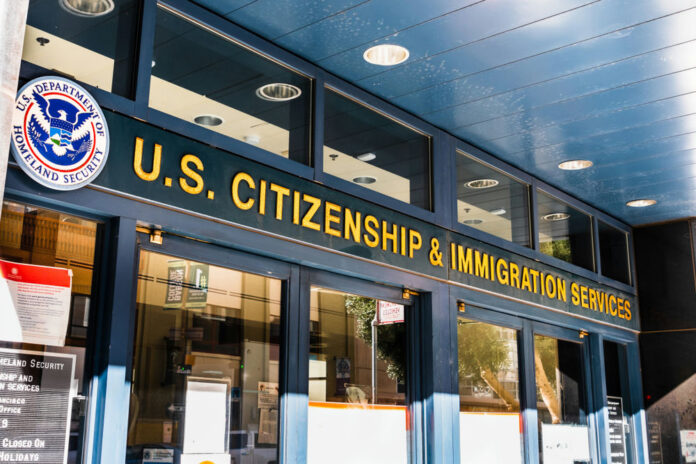
A new Department of Homeland Security plan would nearly double citizenship application costs while wiping out most discounts for low‑income immigrants.
Story Snapshot
- DHS proposes raising the main citizenship application fee 75–80%, from about $750 to over $1,300.[3]
- The plan ends almost all fee waivers and reduced fees, except for current and former military.[3]
- DHS says higher fees are needed to cover full vetting and security costs under Trump’s executive orders.[3]
- Critics warn the hikes will hit working families hardest and could discourage legal immigrants from becoming citizens.[1]
DHS Plan: How Much More Will Citizenship Cost?
The Department of Homeland Security has proposed one of the largest citizenship fee hikes in recent history. Under the draft rule, the government’s charge for Form N‑400, the standard application for naturalization, would jump from $760 to $1,330 for paper filings, a 75 percent increase.[3] Online applicants would see fees rise from $710 to $1,280, an 80 percent hike.[3] Appeals of denied applications, filed on Form N‑336, would also spike sharply, from $830 to $1,475.[3]
These proposed fees sit on top of increases that already took effect in 2024. That earlier rule lifted naturalization costs to today’s $760 paper and $710 online levels and folded biometrics into the main fee.[7] Now, just two years later, DHS wants to push the total cost well past $1,300 for most applicants. For many families still fighting inflation and high energy bills, that is real money, not a rounding error.
Trump Administration’s Cost-Recovery Argument
The Trump administration says this move is about paying the true price of strong vetting. In its proposal, DHS argues that current fees do not “fully cover the cost of thoroughly adjudicating applications for naturalization, including necessary screening and vetting checks,” which officials say have been expanded under President Trump’s executive orders.[4] The agency wants a “beneficiary‑pays” model, where applicants themselves fund the full cost of background checks, interviews, and security reviews.[2]
DHS also points to a major budget gap inside the immigration system. Under today’s fees, citizenship processing is partly subsidized by other immigration forms. Analysts describe a shortfall that runs into hundreds of millions of dollars per year for naturalization work alone.[2] By raising N‑400 and N‑336 fees and ending most waivers, DHS projects hundreds of millions in new revenue from about one million applicants per year.[1] Supporters say this aligns with conservative ideas of user pays, not endless cross‑subsidies and federal bailouts.
End Of Waivers And Discounts: Who Gets Hurt?
While many conservatives back tighter vetting, the way DHS is structuring these fees raises fairness questions. The rule would eliminate the reduced $380 citizenship fee now available to applicants with household incomes at or below 400 percent of federal poverty guidelines.[1] It would also end income‑based fee waivers for most N‑400 and N‑336 filers, leaving only current and former U.S. service members fully exempt.[2] That means a low‑income green card holder would see their cost jump from $380 to $1,330, a roughly 250 percent increase.[1]
us citizenship about to get way more expensive — $1330 for n-400, $1475 for n-336, and no more low-income discounthttps://t.co/bB4Q4DdAQi#citizenship #immigration #uscis #usa #dhs #breaking #news #fees
— TheTrendsWire (@thetrendswire) June 23, 2026
Immigrant advocates and legal aid groups warn this change hits working‑class families hardest. They note that many long‑term, law‑abiding residents already struggle to save for the current fees after taxes, rent, and food.[3] Pushing the price tag near or above a month’s take‑home pay could delay or deter naturalization, especially for large families.[4] That matters for conservatives too, because new citizens gain the full right to vote, serve on juries, and engage in civic life instead of sitting in a permanent “resident but not citizen” limbo.
Conservative Lens: Security, Sovereignty, And Access
For Trump‑leaning readers, the core tension is clear. On one side, serious vetting, fraud checks, and enforcement cost real money. After years of open‑border chaos and weak screening, many patriots want citizenship to mean something and expect applicants to shoulder more of the burden.[4] On the other side, this specific fee design leans heavily on low‑income legal immigrants, not big corporations or visa mills, and could slow the path for those who followed the rules.
Importantly, this is still a proposed rule, not settled law. DHS has opened a 60‑day public comment window, running from late June into August.[3] During that period, citizens and lawful residents can submit feedback, challenge parts of the plan, and push for changes before it becomes final. Conservative voters who support tough vetting but worry about pricing out hardworking families may want to press DHS to keep some targeted discounts, maintain strong security, and ensure the system rewards legal pathways over illegal ones.
Sources:
[1] Web – DHS Proposes To Increase Citizenship Application Fees By 80%
[2] Web – DHS Proposes Significant Increase in Filing Fees for Naturalization …
[3] Web – DHS Proposes 75% Increase to US Citizenship Application Fee – Ellis
[4] Web – Trump Administration Moves to Increase the Price Tag for Seeking …
[7] Web – U.S. CITIZENSHIP MAY GET A LOT MORE EXPENSIVE If DHS gets …