
Trump says frozen Iranian money under U.S. control will now cover ship damage in the Strait of Hormuz.
Quick Take
- Trump said Iranian funds in U.S. control would pay for ship, cargo, and related damage.
- Tehran blasted the move as an “incendiary precedent.”
- Reporting says the money is already frozen in U.S.-controlled accounts.
- The legal path for using those funds this way is not clearly laid out in the available reporting.
Trump Ties Maritime Damage to Frozen Iranian Assets
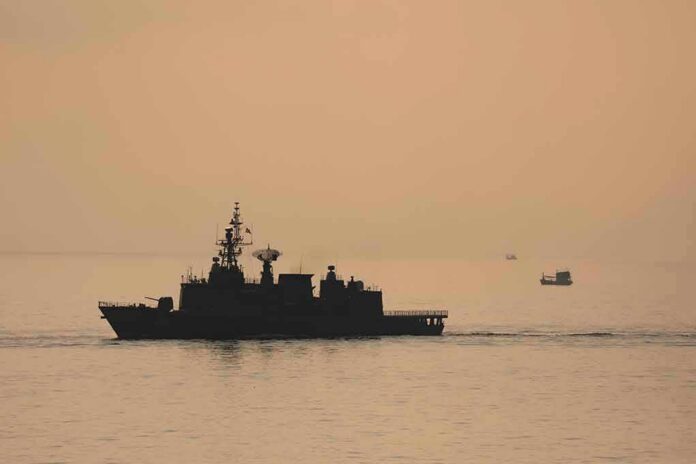
President Trump said frozen Iranian money in U.S. possession will pay for damage to ships and cargo in the Strait of Hormuz. He wrote that “any and all damages” will be covered by Iranian money the United States “has in its possession, and controls,” and he called that “fair and equitable.” The announcement fits a broader push to make Tehran bear the cost of regional attacks that threaten global trade.
Townhall and other outlets reported the same core message from Trump’s Truth Social post. Their coverage said the policy would apply to ship, cargo, and related losses, with the funds already under U.S. control. That point matters because the administration is not describing a new payment from taxpayers. It is pointing to money already frozen and held inside the U.S. system.
Tehran Calls the Move a Dangerous Escalation
Iran responded with sharp objections. Iranian officials called the plan an “incendiary precedent” and warned that using frozen assets for damage claims could fuel more tension. Reuters also reported that Tehran rejected the idea of using its assets to pay damages to U.S. allies in the Gulf. That reaction shows the dispute is not only about money. It is also about sovereignty, leverage, and who gets to decide when frozen funds can move.
The pushback is predictable, but it does not erase the basic fact that the assets are already frozen. Reporting has described U.S.-controlled Iranian funds sitting in restricted accounts, including a widely discussed pool of roughly $1.75 billion in New York. Other coverage says the exact total is not fully known and may be much larger. For readers, the key issue is simple: control over the money gives Washington leverage, but not necessarily an open legal road.
The Legal Fight Is Bigger Than This One Announcement
The biggest unresolved question is authority. The reporting provided here quotes Trump and other officials, but it does not identify a statute, court order, or published legal opinion that clearly authorizes this exact compensation plan. That gap leaves room for criticism from lawyers, courts, and foreign governments. It also means the administration is making a forceful claim before the legal framework is fully explained to the public.
🚨 TRUMP: IRAN WILL PAY FOR SHIPPING ATTACKS WITH FROZEN FUNDS: President Donald Trump has officially declared that any damages to ships or cargo caused by Iranian attacks will be paid for directly using seized Iranian assets held by the U.S.
📌 Key Details:
• Automated… pic.twitter.com/yzx207g5dD
— Predictivemoney (@Predictivemoney) July 24, 2026
There is also a wider history behind the dispute. The International Court of Justice ordered the United States to pay compensation in an earlier case involving frozen Iranian assets, while also leaving some jurisdictional questions unresolved. That history cuts both ways. It shows frozen assets can become the center of major legal fights, and it shows these fights rarely end cleanly. For conservatives, the practical lesson is that government power over seized funds should be spelled out, not hidden behind slogans.
What This Means for U.S. Policy
The administration is trying to send a message that attacks on shipping will carry a direct financial cost. That approach may appeal to voters who want deterrence, strength, and less theater from Tehran. But the move also raises an important guardrail question. If the government can redirect frozen foreign assets to pay disputed losses without a clear claims process, critics will argue the executive branch is stretching its reach too far.
At the same time, the available reporting does not prove that Iran’s opponents have a clean answer on the facts of the maritime damage itself. The sources here do not show a full claim-by-claim adjudication or a published compensation formula for shipowners and cargo owners. So the current picture is this: Trump has announced a hardline policy, Iran is fighting it, and the legal end state remains unsettled.
Sources:
theamericanconservative.com, aljazeera.com, townhall.com, chosun.com, www2.stockmarketwatch.com, reuters.com